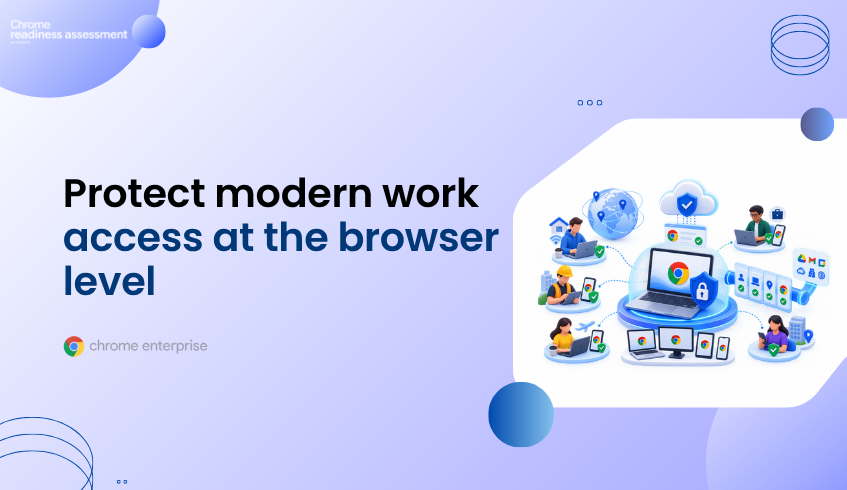
Modern Work Access Needs Browser-Level Security
Modern work does not always happen from one office, one device, or one fully managed environment. Employees, contractors, partners, remote teams, and BYOD users all access business apps, files, dashboards, and internal systems through the browser.
That makes the browser a key security layer. When access happens through web apps and SaaS tools, organizations need visibility and control closer to where users actually work.
Chrome Enterprise Premium helps organizations strengthen secure enterprise browsing with threat, data, and access protection directly in the browser. CRA helps teams review browser usage, browser risk, and readiness signals before stronger CEP controls are planned.
Modern Access Is Now More Distributed
Many organizations now support different access patterns across employees, contractors, partners, temporary workers, remote users, and BYOD users. Work may happen from corporate laptops, shared devices, personal devices, or mixed-use environments.
These users still need secure access, but their environments can be harder to control. A device may not be fully managed. A browser may not follow the same policy baseline. Extensions, profiles, browsing behavior, and access patterns may vary from user to user.
This makes browser-level security important. When work happens through cloud apps and web systems, the browser becomes one of the most important places to apply visibility and control.
BYOD Security Cannot Depend Only on the Device
Traditional endpoint security works best when every device is owned, configured, and managed by the organization. But modern work access does not always fit that model.
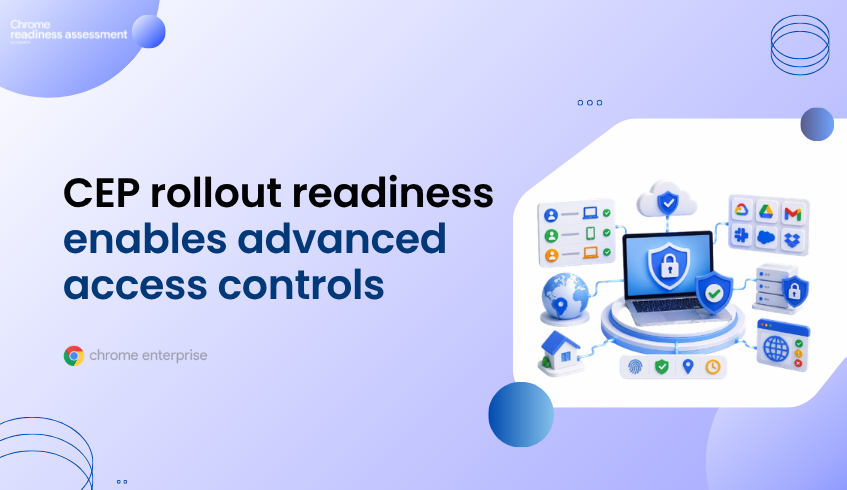
A stronger access strategy needs to look at identity, device context, browser posture, and the application being accessed. Chrome Enterprise Premium access protection helps organizations control access based on identity and request context.
This helps teams move beyond simple allow-or-block decisions. Access can be planned with more context, especially when users are connecting from different devices, locations, and browser environments..
Chrome Enterprise Premium Helps Secure SaaS Access
Many modern work workflows depend on SaaS apps. Users may access project tools, CRM systems, HR portals, finance platforms, file repositories, or internal web applications through the browser.
Chrome Enterprise Premium secure access for SaaS applications supports context-aware control over who can access SaaS applications. The secure gateway checks Context-Aware Access policies to authorize user and device access.
This matters because organizations need more than a password. They need stronger assurance around who is accessing the app, what context they are accessing from, and whether the browser environment supports the intended security posture.
Browser Risk Visibility Should Come First
Before teams expand access controls, they need to understand the browser environment they are working with. Which browsers are being used? Where are unmanaged or risky patterns visible? Which browser activities may need review before stronger CEP policies are applied?
Browser Insights helps teams understand browser usage across the organization. CEP Accelerator then helps connect browser risk visibility to Chrome Enterprise Premium planning.
This gives IT and security teams a clearer starting point. Instead of applying access controls without context, teams can first review browser behavior and risk areas that may affect rollout planning.
CRA Helps Teams Plan Contractor and BYOD Readiness
Chrome Readiness Assessment helps teams prepare for Chrome Enterprise Premium adoption with better visibility. For modern work access, this matters because the risk is not only about the user account. It is also about the browser path used to reach business applications.
CRA helps teams review browser usage, extension exposure, risky domain access, and other browser signals that can support CEP planning. For a closer look at this capability, read Spotlight on the Browser Insights Feature.
For wider deployment planning, CEP Deployment Readiness Insights helps organizations understand what could slow or block Chrome Enterprise Premium rollout before deployment begins.
From External Access Risk to Secure Browser Planning
Modern work access will continue to include employees, remote teams, partners, contractors, temporary workers, and BYOD users. The goal is not to stop flexible work. The goal is to make access safer, more visible, and easier to manage.
Chrome Enterprise Premium helps organizations strengthen browser-level access protection. CRA helps teams understand browser readiness before expanding those controls.
Together, they support a more practical path for securing modern work access without treating every access scenario the same way.
FAQ
Why is modern work access a browser security issue?
Modern work often depends on browser-based access to SaaS apps, cloud tools, internal systems, and business data. This makes browser visibility and access control important.
How does Chrome Enterprise Premium support modern access security?
Chrome Enterprise Premium supports secure enterprise browsing with threat, data, and access protection directly in the browser. It also supports context-aware access controls for SaaS and web applications.
Why does browser readiness matter before CEP rollout?
Browser readiness helps teams understand current browser usage, risk areas, and possible rollout blockers before Chrome Enterprise Premium controls are expanded.
How does Browser Insights help?
Browser Insights helps teams understand which browsers are used across the organization and where browser activity may need review before security planning.
How does CEP Accelerator connect to this use case?
CEP Accelerator helps teams review browser risk areas and prioritize Chrome Enterprise Premium planning based on what is visible in the browser environment.
Modern work access should not depend on blind trust. Chrome Enterprise Premium helps secure the browser layer, while CRA helps teams understand readiness before expanding access controls across modern work environments.