Threat Protection Works Better When CEP Rollout Readiness Is Clear
Browser-based threats are now part of everyday enterprise security. Users open links, access SaaS apps, download files, visit external websites, and work across cloud tools directly from the browser.
That makes the browser an important place to stop threats earlier. Chrome Enterprise Premium helps organizations strengthen secure enterprise browsing with threat, data, and access protection. Its threat protection capabilities help defend against real-time phishing, malware, unsafe downloads, and harmful sites directly in Chrome.
But threat protection is only useful when it can be rolled out smoothly. Before teams expand Chrome Enterprise Premium across users and devices, they need to understand whether the environment is ready for deployment.
That is where Chrome Readiness Assessment helps. CEP Deployment Readiness Insights gives IT and security teams visibility into what may need review before Chrome Enterprise Premium rollout begins.
Threat Protection Is Different From DLP
DLP focuses on protecting sensitive data from leaving the organization through actions such as uploads, downloads, copy, paste, and print.
Threat protection focuses on stopping harmful activity before it affects users. This can include phishing attempts, malware, unsafe downloads, and risky websites. Chrome Enterprise Premium supports real-time phishing, malware, and sandboxing protection to help detect and block these threats in the browser.
Both areas matter, but they solve different problems. DLP protects data movement. Threat protection helps protect users and devices from malicious activity.
The Browser Is Where Many Threats Reach Users
Enterprise users spend much of their day in the browser. They open email links, download attachments, access SaaS tools, review dashboards, use internal portals, and work with external websites.
That creates a wide threat surface. A phishing page can target credentials. A malicious download can introduce risk. A harmful site can expose users to unsafe content. A risky browsing path can create problems even when the user is simply trying to complete normal work.
This is why browser threat protection should not be treated as an add-on. It belongs close to the place where users interact with apps, files, and web content.
CEP Helps Bring Protection Closer to Work
Chrome Enterprise Premium helps organizations apply protection directly in Chrome. Instead of relying only on network-level or endpoint-level controls, teams can bring security closer to browser activity.
This matters because modern work is web-based. Users may move between SaaS apps, cloud files, internal tools, and external websites in the same session. Threat protection inside the browser helps security teams reduce exposure where daily work actually happens.
For organizations planning secure enterprise browsing, CEP can support a stronger security layer across phishing protection, malware protection, unsafe download protection, and safer web access.
Readiness Matters Before Threat Protection Expands
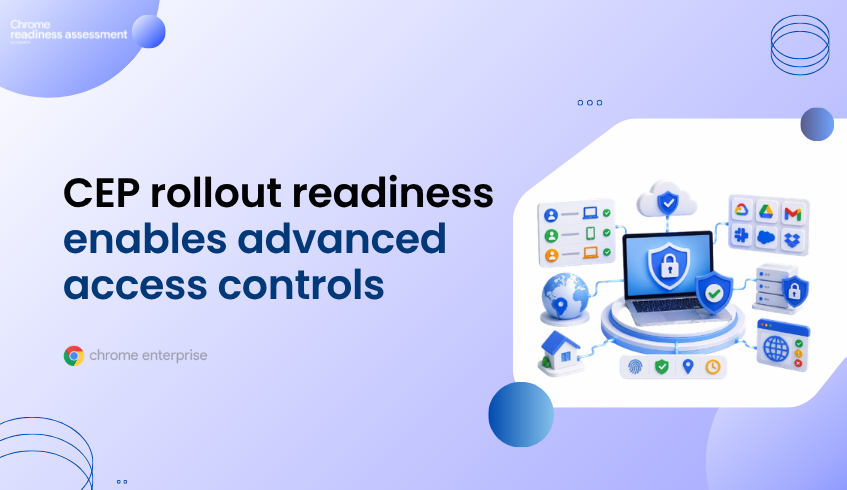
A strong CEP rollout depends on more than enabling security capabilities. IT teams need to understand whether devices, networks, browser environments, and operational conditions are ready.
Without readiness visibility, rollout issues may appear late. Some devices may need attention. Some environments may have policy or connectivity gaps. Some users may depend on browser setups that need review before stronger controls are introduced.
CEP Deployment Readiness Insights helps teams identify readiness gaps before deployment begins. This gives organizations a clearer path to plan rollout waves, prioritize review areas, and reduce surprises during implementation.
CRA Helps Teams Plan CEP Threat Protection
Chrome Readiness Assessment helps organizations move from Chrome Enterprise Premium interest to practical rollout planning. For threat protection, that means checking whether the environment is ready before security controls are expanded across users and devices.
CEP Deployment Readiness Insights helps teams see what may need attention first, so the rollout can be planned with better confidence. Instead of treating every device or user group the same way, teams can use readiness visibility to guide the next step.
For a deeper look at this feature, read Introducing CEP Deployment Readiness Insights.
From Browser Threats to Safer CEP Deployment
Threat protection is becoming more important as enterprise work continues to move through the browser. Chrome Enterprise Premium helps organizations protect users from phishing, malware, unsafe downloads, and harmful sites directly in Chrome.
CRA helps make that protection easier to plan. With CEP Deployment Readiness Insights, teams can understand readiness gaps before deployment begins and move toward secure enterprise browsing with fewer surprises.
FAQ
Does Chrome Enterprise Premium include threat protection?
Yes. Chrome Enterprise Premium includes threat protection capabilities along with data protection and access protection. It helps defend against real-time phishing, malware, unsafe downloads, and harmful sites in Chrome.
Is threat protection the same as DLP?
No. Threat protection focuses on harmful activity such as phishing, malware, unsafe downloads, and risky sites. DLP focuses on protecting sensitive data from moving through actions such as upload, download, copy, paste, and print.
Why does threat protection matter in the browser?
Many enterprise threats reach users through browser activity. Users open links, access cloud apps, download files, and visit web pages throughout the workday, making the browser a critical security layer.
How does CRA support CEP threat protection planning?
CRA supports planning through CEP Deployment Readiness Insights. It helps teams understand readiness gaps before Chrome Enterprise Premium rollout begins.
Why should teams assess readiness before deploying CEP?
Readiness assessment helps teams reduce rollout surprises. It gives IT and security teams visibility into areas that may need review before CEP security controls are expanded.
Chrome Enterprise Premium helps protect users where browser-based work happens. Chrome Readiness Assessment helps teams understand whether the environment is ready before that protection is rolled out at scale.